
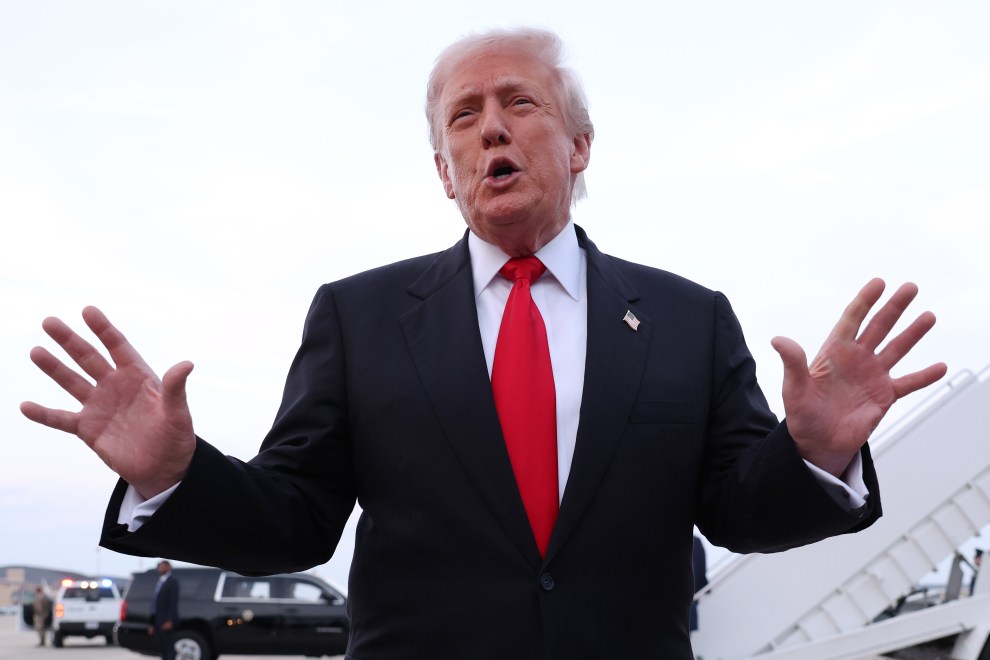
President Donald Trump confirmed Tuesday that the United States has agreed to a two-week ceasefire with Iran, pausing a conflict that has shaken global markets and raised fears of a wider regional war.
The announcement came just hours before a U.S. deadline for potential military escalation. Trump said the pause in hostilities would depend on Iran reopening the Strait of Hormuz, a critical oil shipping route.
“Based on conversations with Prime Minister Shehbaz Sharif… I agree to suspend the bombing and attack of Iran for a period of two weeks,” Trump said in a social media post.
He described the arrangement as a “double sided CEASEFIRE,” signaling that both nations are expected to halt military actions during the temporary truce.
Diplomatic push opens narrow window
The ceasefire follows mediation efforts led by Pakistan, whose leadership worked to bring both sides to the negotiating table.
U.S. officials said Iran has agreed to reopen the Strait of Hormuz, a key condition for the deal. The waterway carries a significant share of the world’s oil supply, and its closure had disrupted shipping and driven up energy prices.
Trump indicated that the United States had received a 10-point proposal from Iran, calling it “a workable basis on which to negotiate.”
“Almost all of the various points of past contention have been agreed,” Trump said, adding that the two-week pause would allow time to finalize a broader agreement.
The war began in late February when U.S. and Israeli forces launched strikes on Iranian targets. Iran responded with attacks on Israel and U.S. positions in the region, escalating tensions across the Middle East.
Fragile truce amid ongoing tensions
Despite the announcement, the ceasefire remains uncertain. Officials cautioned that communication delays and ongoing regional dynamics could complicate implementation.
Some fighting has continued in neighboring areas, and questions remain about whether all parties will fully comply.
The agreement has also drawn mixed reactions in Washington. Supporters argue the pause reflects strategic progress, while critics say it risks giving Iran time to regroup.
Global markets reacted quickly. Oil prices dropped sharply following news of the ceasefire, reflecting hopes that shipping through the Strait of Hormuz will resume.
Still, analysts warn the deal is only a temporary measure. Major issues, including Iran’s nuclear program and regional military activity, remain unresolved.
For now, the two-week ceasefire offers a brief window for diplomacy. Whether it leads to a lasting agreement remains unclear.