
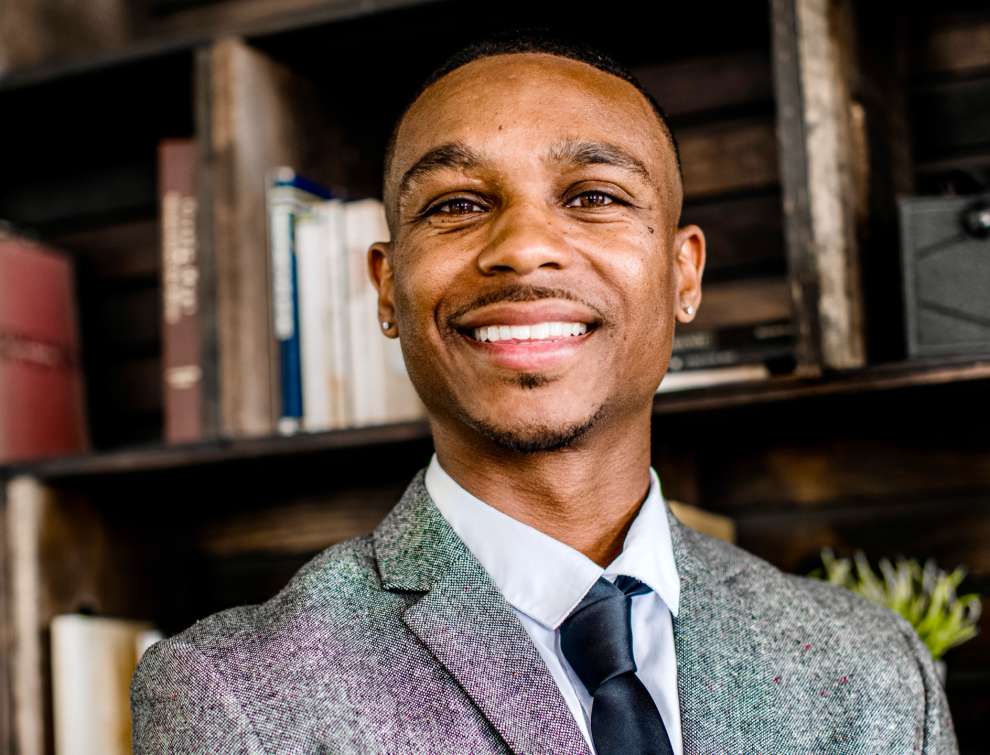
Journalist Jay Ticker has spent years watching media evolve from traditional newsrooms to independent digital platforms. Now, with the launch of The Mr. Helpful Show on Kick, he is building a model that combines journalism, livestreaming, community and ownership.
Ticker’s vision is shaped by lessons from his career, including professional setbacks that taught him the importance of collaboration and controlling his work. He believes Black media professionals have more power when they stop competing for limited institutional space and start building together.
The show will feature musicians, influencers and cultural figures in extended, unscripted livestreams. Ticker plans to mix interviews with visits to Black-owned businesses and random acts of kindness.
That mission connects to two Los Angeles icons who shaped his thinking: Kobe Bryant and Nipsey Hussle. Bryant’s relentless work ethic and commitment to accountability inform Ticker’s approach to building the platform. Hussle’s emphasis on community ownership comes alive through planned activations at Marathon Burger.
For Ticker, the future of media requires more than adapting to new technology. It requires creating opportunities for journalists to own their platforms, develop audiences and participate in the businesses they help build.
On the eve of the new Kick’s series launch, Jay Ticker talks to journalist Bryson “Boom” Paul about the future of media and what Mr. Helpful and the Helpful community brings to it. Read the complete interview below.
Bryson “Boom” Paul: First and foremost, in your own words, what exactly is The Mr. Helpful Show?
Jay Ticker: Well, Mr. Healthful is a show that’s going to be mainly on live stream, on a kick stream platform. And what we’re gonna do is just hook up again with just celebrities and influencers who can show that all content doesn’t have to be negative, but it can still be funny at the same time and be positive. And that’s what we’re gonna do. Being funny is always going to, so the three, there’s an acronym that exists within journalism that people aren’t familiar with. And I always exercise this acronym. It’s called P. Okay? It’s provoke. Entertain and educate. If you can do all those 3 things within your content, you’ve done your job for the viewer. And based on my experience from the past, I’ve been doing journalism since 2010. I think I’m pretty good with knowing how to do that, including the whole marketing side to it that’s going to be able to push that content to where it’s going to be in the right viewer’s place and lap.
What normally goes on during an episode of The Mr. Helpful Show?
So what you’ll get is you’ll see me hooking up with a social media influencer, a musician, um, a celebrity, or someone who has strong influence in the media. And we’re going to essentially conduct a day in the life of that person. So, for instance, if it was a musician, we would go to the studio, maybe if that’s their idea. We would do some Q and A in the studio, hang out a bit. We would then hop in the whip, go to a black owned restaurant, go support them, by conducting random acts of kindness, and then after that, we will go do something pretty cool, like some type of event. And we would catch it all on camera, and it’s all being produced on live stream. And it would be maybe about 4 to 6 hours, depending on the vibe. But at the end of the day, we’ve got everything in place to make sure that everything goes well in terms of the actual promotional and marketing side, which is always important when you’re creating a brand and distributing content.
Why is The Mr. Helpful Show needed in today’s media landscape based from what you’ve witness in your career?
Well… In 2022, I believe, it could be 2021. I had an individual who I was working alongside of. In fact, he invited me to be a part of one of his platforms. Um, I care not to mention his name at this point because he’s completely irrelevant and, um, he did not, uh, fill fill his end of the bargain. Um, in fact, after, after I went through the hard work of establishing the platform and then going out and actually doing the grass, grassroots, uh, campaigning and footwork, he not only ghosted me, but, he had something really, really inappropriate and negative to say about, um, the outcome of what everything that transpired, um, and in fact, it’s put me in a place where I was, If you really believe in this type of thing, blacklisted or blackballed from the industry, um, for whatever reason. I’ll go further into detail. So, the person that I’m referring to is a local journalist in Los Angeles. That’s where I’m based. And, um, he invited me to do some work with him, um, as a co host on one of his platforms. And during that moment, we already had some indifferences prior to, but when Kobe passed away, I got invited to one of the local radio stations owned by Stevie Wonder, and I did some work. With the program director, we did a memorial, basically, um, on our experiences that we’ve had with Kobe, because obviously we had some some moments where we were able to cover him, you know, in the locker room or, you know, uh, just conducting media. stuff. And so I said, you know what, let me put our differences to the side. And again, this was one of those things where he slighted me, but I always thought that it, in my opinion, the way that I like to carry myself in terms of media, especially during that time, is that I feel like we all need to stick together and whatever problems that we have or a bad experience that we encounter, maybe maybe maybe it could have been something like he didn’t eat his breakfast that morning. You know what I mean? Maybe, maybe his cat or dog died and his goldfish is swimming at the top of the aquarium. I don’t know. So I just put it to the side and I said, you know what, man, let’s go to the back and pause. We went to the back. And we talked in the lunchroom, and we had a conversation. I said, let me start off by saying, bro, um, I apologize if I offended you, that wasn’t my my objective. I just wanted to provide good content, and that’s the reason why I, um, conducted myself the way that I did on your podcast. I just, I believe in making sure that not only do I pull up, but I do a really good job and because I understand what social media doesn’t. I know how to create engagement. And I know how to, you know, give you those viral clips, quote unquote. And long story short, he took it offensively. He’s one of those guys where he really likes uh, he’s a little bit older. Um, just to give you an age. I’m 42. He was, I think he’s probably 45, 46, maybe at this point. And so he’s more of like, um, uh, let’s say maybe like, um, let me give you an older guy. I mean, not to be disrespectful, but you reminds me of Brian Gubble. You know what I mean? Like, he’s not really a, you know, I wouldn’t even say Stephen A. Smith. He’s kind of like, um, I’m more like close to like a Ryan Clark, if you want to compare me to someone or like a Nate Burlington. You know what I mean? So, long story short, um, We made men’s, everything was all good, and so that blew over and we got an opportunity to work together and he, again, he asked me during the pandemic to join one of his podcast shows that he had going on. I joined him. Why not? It makes a lot of sense. We’re both black. We’re the only independent journalist in LA that have our own media platforms. Why not, right? And long story short, to move this fast, um, is that, uh, we put together some ideas about a protest. Obviously, protests around this time, 2020, 2021 are very, very hot. They’re trendy. And they’re, they’re, they, they got some really good momentum. So I’m thinking, you know what, let’s gather some of our constituents and let’s do a protest. He’s like, yeah, I’m down with it. So, okay, let’s link up together. And write down some ideas. So we did. Right after the podcast, a few times we would write down some of our ideas. We gave a name to it and everything. And then when it came to actually go out and actually put it into work, he just, he got MIA. Right. What happened? I’m like, about many, many weeks to talk about this. He just didn’t pulled up. And, um, you know who was out there? My wife. And she was out there, and she, she had, you know, packed me up some lunch, and some, some waters, and, you know, chargers, you know, portable chargers for my, my devices, and I was ready to go, and I went out there to some of the radio stations that, in my opinion, don’t cater to black media and black journalists. In fact, all they do is play our music and Use our content, but why don’t we have any media personalities or journalists actually working for the platform? To me, that’s crazy. And so I initially wrote a letter to these organizations, to their owners, not to anyone else. And in this conversation via email, and I’ve got receipts, by the way, this is not me just saying that I did this. I wrote some emails. I didn’t get any responses. And then I reached out to the program director and they actually said, hey, um, because I took a different angle, before I actually moved forward with this protest, let me ask if they can Maybe let’s do some business. So my asking on the other side was, let me get one of your studio spaces and let me rent out and I’ll pay you guys between, you know, $1000 to $1,500 a month to rent out studio space. So I can podcast from your, because at this point my podcast was picking up steam. Everybody know who I was, and they still know who I am. The problem is, is that they think that I left away. They thought that I went away because I just fell out the face of the earth, not what I was doing was, I was learning from all my mistakes. And then I was turning those negatives into positives, and now when I make my comeback, it’s going to be realer than what you ever thought it was. And that’s what you see right now.
Speaking of Kobe Bryant, rest in peace to the Mamba, how did the NBA icon influence the creation of The Mr. Helpful Show?
Well, if you look at Kobe’s career, he always reinvented himself. right? Remember, he started off with the number eight, and then after the number eight, he went to the 24. And then they said that the 24 was because he wanted to do one over Jordan. What I love about Kobe’s mission is because he always wanted to be great. And I believe that we don’t really have anything purposeful in life if we’re not fulfilling our purpose. Kobe knew his purpose. He was driven. He had the work ethic. He worked towards getting better. He was shooting a 1000 free throws in the gym every single day. That’s, if you remember the song by Rick Ross and Drake, it was called “Stay Scheming.” And there was a lion in his in his song where they said, “Bitch, you wouldn’t win me shooting in the gym?” And that’s where that came from, because Rick Frost and Drake being big supporters of Kobe and his work ethic and that whole mamba mentality is that he never gave up. And that’s what I loved about him. Even when he made mistakes, he wouldn’t always make sure he took accountability. And I feel like that is one of the biggest problems that are… For the mistakes that they or the actions that they make, and for me, that’s 1,000% important, not just with myself, but with my crew, with my team, with my family, my mom, my brothers, and anything else I’m involved with, even at work on my regular 9 to 5.
Why create a helpful avenue for a culture that could easily turn their back on you?
That’s a really good question. And I asked myself that many, many times, even before I came up with the name, Mr. Helpful. But I’ve been raised. I was born in Louisiana. And if you know what Louisiana is about, um, it’s it’s the state of hospitality that, um, they believe in taking, you know, helping out the neighbor, you know, you cannot still go knock on someone’s door to this day and go get a cup of sugar. Easy call. And, um, I kind of carried that, um, those morals and values along with me when I moved to California at the age of 6 and I’ve always been that person. And when I prayed to God about certain things when I was going through my, um, my break. One of the things that he told me was, is that you just, one of the biggest lessons I learned was that you just got to know who the help, right? You got to help the right people. Like, for instance, if you ask me, who would I help today, literally walking outside of this office where I’m at right now? I would tell you it wouldn’t be the guy that’s homeless. A lot of people would think that would be crazy, and I’ll tell you why. Most of the guys that are homeless that I’ve helped in the past, and I’ve had conversations with homeless people before. Most of the reason why they’re homeless is not because they want to be homeless is because most of 95%, my mom works with the homeless, by the way, she does mental health therapy with, with, with a organization in downtown LA where Skid Rose is located, which is one of the most homeless populations in, in the United States of America. And we both compare notes and they’re mostly on drugs. Drugs is the problem. They’re addicted to drugs and or alcohol. And so, for me to cater to someone who doesn’t want to make a change or doesn’t want to put their foot forward to change their lives, I can’t do that. So the Mr. Health will show is about helping people who are already helping themselves, not people who choose not to help themselves. Um, I give you an example. Um, we’re gonna launch August 15th, our our 1st our 2nd episode, but this is gonna be actually the 1st time we actually conduct random acts of kindness. So, for instance, we want to create an ecosystem. The first place where we’re gonna go is to a place where it caters to black business and the black economy. What I know about the Jewish economy is that they all support each other, right? So they have things, this type of food called kosher foods, and all these kosher foods are located in kosher grocery stores, and the kosher grocery stores are owned by Jews. And these kosher grocery stores that are owned by Jews are also in Jewish communities. So where do we fall, and how can we create our own economy? Well, we did have it in, you know, in the 1940s when, you know, um, the, uh, Tulsa, Oklahoma, um, uh, Black Wall Street Massacre transpired. And then we know the story behind it, but they still don’t want to acknowledge it. Thats fine. We know what happened because history can never be erased and never be deleted, especially when, um, our elder, the last elder of the uh, person who experienced it, she passed away a couple years ago. I forget her name off the top of my head. But she was still speaking. And so, well, you know, her story was already out there and a lady who has nothing to lose, I don’t understand why she would fabricate a story like that. I mean, it pretty much just catered to everything else that everyone else was saying. And we know that the Tulsa, Oklahoma City massacre happened because it’s literally in history. It’s just not publicized as often. And so my point of saying all that is, is that, um, the journey for the Mr. Health of Show is that we’re going to pull up to a lot of black businesses on August 15th, and we’re basically going to help a lot of the type of different demographics. One, single parent black moms and single parent black fathers. And, um, married couples who have children, because what it shows is, is that, you know, I hate these organizations and these foundations that cater to just one demographic. If a single black mom is trying to, trying to very hard, or very hardest to raise her, her youth, her, her children, and a single black father is trying to do his very best to cater to helping his family, his children. And but what happened to the people that are actually doing it that have the mom and the father? Why are we catering to just those 2 particular entities? I think everyone needs help, especially now. So we’re gonna cater to those people, but then why are we helping these people financially? Because they may have hard times and we don’t know about it. People don’t really want to talk about their financial hardships. Yeah. Then also, check this out. If we go inside, let’s just say the marathon burger. the reason why we chose the Marathon Burger is because Nipsey Hussle’s birthday is during that weekend. He’s also dropping a lunch that weekend where he and the artist by the name of Bino Rideau have had a collaborative project that Black Sam took over and it’s going to drop on August 14th, but that whole weekend, the 15th day after that project is released, is going to be Nipsey’s actual birthday. So we’re gonna go to Marathon Burger, and we’re gonna help out these families, purchase foods, have conversations with them, get some questions from Q and A time with them. And then we’re gonna also bless the workers as well. And he has 3 locations, one in Long Beach, one in LA, which is off of Melrose, right by Fairfax High School, and the other was in Venice Beach, California. And we’re gonna hit all three of those, and then we’re gonna finish out our day at, uh, It’s Arrays, who is a, uh, movie director and, um, she’s got some really big time in the industry. She now has her own restaurants. So we’re going to finish our day with eating food at Israel’s restaurants the evening of.
You collaborated with Nipsey Hussle’s The Marathon Burger for the launch of The Mr. Helpful Show. Tell us how that collab come together?
I like that question. Because anybody can just get up there and do it. Um, but not really the way we’re gonna do it. So what I’ve done is I’ve, um, literally made my way to these restaurants already. And I have a pretty good relationship with some of the owners of the restaurant. But I’ve bonded and I’ve created a relationship with these people by supporting their business. And for that, I appreciate, and I do that off camera. So when I come up there and do that, and I’m not talking about just the owners itself, I’m talking about what the actual employees, the people in the back cooking, the people at the cash register, the people who are handing out the drinks and the food, every single body, because every single person is important when you’re running a business.
Journalist Jay Ticker Addresses Media’s Future With Launch Of Kick’s The Mr. Helpful Show
In today’s media, layoffs have become the norm, but journalists are constantly blaming the current landscape on “greedy corporations,” and never take any accountability for the current landscape. In your opinion, what is it difficult for media to take any accountability?
it’s plain and simple. They don’t know the business, and they have lack of financial literacy. It is. You don’t understand the business. You thought you understand the business, because you were, quote unquote, the talent that they were using to connect with the other talent. But you’re just, unfortunately, you’re just a pawn until you can gain ownership. I wanna push ownership. The goal with creating the Mr. Health was show was to create a platform to where I can have multiple channels of journalists. create their own channel under the umbrella of the Mr. Healthful Show, just like you would do with a corporation or LLC and put a DDA right under that. That would be the idea for the Mr. Healthful Show. We want to make sure that we allow ownership to be given, and right now, I’m not sure if you guys understand the numbers in streaming, but live streaming right now, Twitch in particular. They’re providing 50% payout for all of the gifts and the subscriptions that these creators are receiving. But check out Kick. Kick is a little different. And the reason why it’s a little bit newer than Twitch. Kick is paying out 95%. of the live streaming income. So, one thing we gotta do is we gotta stay with the future. We have to continue to elevate, and we have to continue to understand the innovation and the evolution of technology. It’s always gonna be there. We can’t run away from it. Traditional journalism is no longer what it was, and it hasn’t been that way in the last 15 years. Let’s be honest. Right? When blogging came in, no offense to bloggers, journalists was like, You’re not a journalist, right? I mean, I was one of those, I’m like, you didn’t go to school. Yeah, you’re the school. You didn’t like, yeah, yeah. So, like, for me, I’m telling people, stay with what’s going on with technology. Stay online on in, uh, on par with the, the evolution of technology in, uh, the next 4 to 5 years is predicted by people who run the world, and I’ve seen these interviews that, um, journalism won’t even be a vague. And this is the reason why I’m also making sure that we keep it alive on the Mystery Helpful Show. So when you’re watching it, you’re gonna see me doing impactful questions or conducting impactful questions that are going to be able to provide that P format for that acronym, the provoke, the entertain, the educate. I want to have people crying on my live stream. I want to doctors, I want to Dr. Oz the shit out of my clientele. you kidding me? Um, and what we’re gonna do is we’re gonna provide journalists who are just maybe getting through the ranks. Um, the opportunity to conduct write-ups. And so now they’re gonna get paid, word for word, maybe we do five cents a word. Maybe we’ll just do 50 $50 an article. Maybe we’ll do a 75, you know, dollars an article, along with a video, but it’s just keeping our, uh, economy alive, and that’s what my main goal is, besides the fact that we’re gonna be conducting random acts of kindness and actually helping people as well.
On accountability, how does your livestream help everyone accept taking accountability?
Well, if you’re not able to learn how to take accountability, you’re gonna learn by watching our show, because I’m gonna make mistakes probably every single live stream. And it’s going to be a mistake that I don’t intend to make, but it’s just showing my human element and that, that, that I am not Mr. Perfect. In fact, you know what? Before I came up with a Mr. Healthful show, my name for the show prior to was the Mr. Perfect Show. And the reason why I was called The Mystery Perfect Show is because I wanted to show you guys my imperfections. It was the exact opposite. I want to show you guys that, yeah, I can go out and I can do so much community work and community service and link up with all these celebrities and athletes that I have within my network based on my former work. And then my future and current work as well. But there’s never gonna be a moment where we can curate this content and make it look perfect. You’re gonna be able to see the good sides, you’re gonna be able to see the bad sides, you’re gonna see the ways where I can improve upon certain things, and that’s when I’m gonna go ahead and reach out to my chat and ask them questions. We want to ask, talk to chat. Hey, chat, what you guys think about this episode? So after our streams, certain days out of the week, I’m going to have live stream chats with my discord, along with my audience, and we’re gonna sit down and create ideas, topics, shows, and that’s gonna be called that community. It’s called the helpfuls. So it’s going to be referred to as the helpful community. The helpfuls.
How will The Mr. Helpful Show on Kick strengthen Black media?
My story. Me being able to have a conversation with you, because what this does, that provides exposure for the Mr. Helpful Show, to know that where I come from, you guys can actually continue. If you move forward, you can do it too. And I could have gave up and I could have just said, let me sit back in my 6 finger salary and I could just relax and just take care of my family. But I still feel like that need is there for us, and that’s the reason why I’ve been communicating, honestly, with even smaller platforms, because I, and in the conversation we have is, is I like smaller platforms because that’s where I started. And I understand the need that these, in terms of funding and support, and the knowledge and information on how to build a mainstream platform, is main mainstream a platform is not there. And you can try to reach out to the shade room. They’re not gonna talk to you. They’re trying. They’re trying. They not gonna talk to you. You have to be able to have 100,000 followers with a blue check on your name. You have to have multiple artists, articles written about you. You have to be a family member of someone on the staff. Like it has to be a homie, a friend, like, and I don’t like playing that game. I like my work to speak for itself. So my influence, in terms of my journey, is what I hope that will influence people, black media professionals who are going to school in paying their hard earned dollars, and that tuition that they got to pay, going through school for communications or for broadcast journalism. That is not, it’s not wasted. And as a matter of fact, come join me. And we can do this together, because I really feel like if we’re all like minded, and if we all know how to work together as a team, and if everybody can understand their position, we’re more stronger and powerful as a unit instead of me just doing this on my own. That’s what I want to promote.
Lastly, Jay, in your opinion, what is the foreseeable future for The Mr. Helpful Show?
We can probably take this to a mainstream network and maybe pitch it. They normally don’t like when you do that. Uh, because you already have your established, um, you know, audience. It’s already yours and it’s nothing that they can take and that’s nothing that they can, you know, control and all that kind of stuff. So I have some other ideas. I’ve got some written content that I haven’t introduced to some executives and all that good stuff yet, but ultimately, what I would like to do is just stick to the streaming platforms right now and ultimately create my own streaming platform. That would be the gig right there.
You may watch The Mr. Helpful Show, hosted by Jay Ticker, regularly on Kick.