
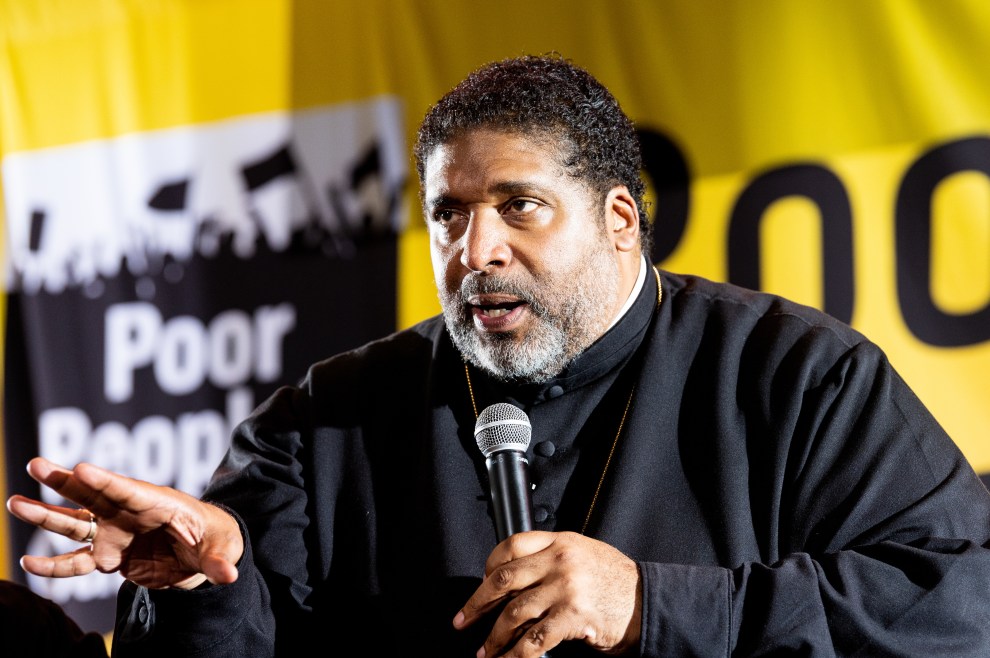
Pastor and civil rights activist Rev. Dr. William J. Barber II is suing AMC Theaters for being escorted out of their Greenville location last year, claiming his wheelchair was a fire hazard.
The religious leader said in an interview with Religion News Service that while seeing The Color Purple, he was asked to leave after being told that he could not use a special chair to accommodate his ankylosing spondylitis.
The civil rights leader and minister was there to see the movie with his 90-year-old mother.
Ankylosing spondylitis is a form of arthritis that inhibits Barber, 60, from sitting for long periods of time as well as using a wheelchair. He often uses crutches and carries with him a specially-made chair that allows him to sit more comfortably, per RNS.
“My chair has been everywhere,” Barber told the outlet. “In hospitals, in restaurants, in airports, in the White House and in Congress. It’s a need that I have because I face a very debilitating arthritic condition.”
“I felt like I wasn’t being heard,” Barber told CNN. “It felt as though they weren’t even trying to consider making accommodations for my disability.”
According to Black Enterprise, Barber’s attorney, Harry Daniels, claims his client “was subject to horrific injustice” by the employees.
“He was embarrassed, defamed, accused of committing a crime, and subject to a horrific injustice by employees at the AMC theater,” Daniels noted at a Dec 19 press conference.
Barber, a pastor and social justice advocate, has been building a broad-based grassroots movement in faith-based communities to confront racial and economic inequalities.
AMC Apologizes
“We sincerely apologize to Bishop Barber for how he was treated, and for the frustration and inconvenience brought to him, his family, and his guests,” the company told RNS. “Our theatre teams work hard to accommodate guests who have needs that fall outside of the normal course of business.”
Despite the apology, Barber maintains that this was a violation of the Americans with Disabilities Act, which requires businesses to accommodate customers with disabilities.
“This is not the ancient world, where people who are sick are pushed to the side and told, ‘You can’t participate,’” he told RNS. “With our laws, you have to make the accommodation.