
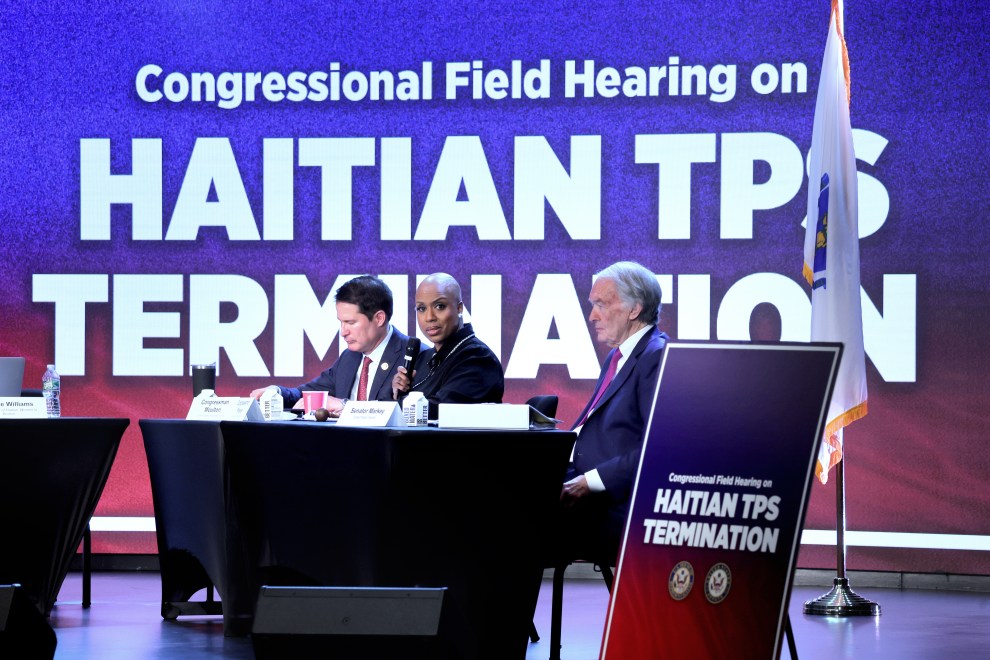
A federal judge has temporarily blocked the Trump administration from ending a humanitarian protection for more than 330,000 Haitians, per The New York Times.
On Monday (Feb 2), U.S. District Judge Ana C. Reyes, who oversees the case in Washington, D.C., denied the administration’s motion to dismiss a lawsuit challenging the Department of Homeland Security’s termination of Temporary Protected Status, or T.P.S.
According to Reuters, Reyes found that the plaintiffs are likely to succeed in showing the decision was made improperly, and raised serious concerns about whether the move was driven by hostility toward nonwhite immigrants rather than a fair legal review.
Reyes noted that Kristi Noem, in announcing her decision to revoke TPS for Haitians, referred to those seeking refuge in the US as “killers, leeches, or entitlement junkies.”
“They are instead: Fritz Emmanuel Lesly Miot, a neuroscientist researching Alzheimer’s disease; Rudolph Civil, a software engineer at a national bank; Marlene Gail Noble, a laboratory assistant in a toxicology department; Marica Merline Laguerre, a college economics major; and Vilbrun Dorsainvil, a full-time registered nurse”, the judge added.
The ruling offers a reprieve for Haitians with T.P.S., some of whom have lived in the country for years.
The Trump administration has already signaled it will appeal. DHS spokesperson Tricia McLaughlin said the department believes TPS has been misused as a long-term immigration solution and argued the ruling came from an “activist judge,” according to Reuters.
Temporary protected status can be granted by the homeland security secretary if conditions in home countries are deemed unsafe for return due to a natural disaster, political instability or other dangers. While it grants TPS holders the right to live and work in the US, it does not provide a legal pathway to citizenship
While the Department of Homeland Security said conditions in Haiti had improved, lawyers for the plaintiffs argue the situation remains dire.
“If the termination stands, people will almost certainly die,” attorneys for Haitian TPS holders wrote in a court filing in December. “Some will likely be killed, others will likely die from disease, and yet others will likely starve to death.”