
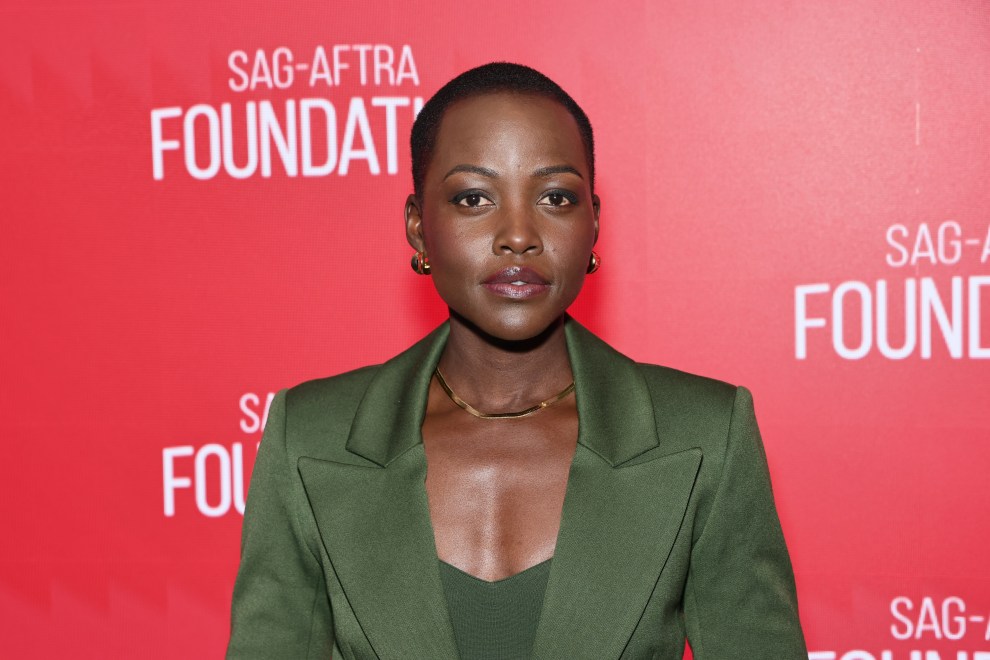
Lupita Nyong’o is opening up aboout a decades-long health battle with uterine fibroids.
On February 25, the Oscar winner sat down with the “Today” show to pull back the curtain on a fibroid condition that has grown significantly more complex since she was first diagnosed in 2014.
Uterine fibroids is a painful condition where noncancerous growths form on or around the uterus. It can lead to debilitating symptoms like heavy menstrual bleeding, long periods, pelvic pain, frequent urination, constipation and back and leg pain.
Nyong’o’s 2014 discovery of her condition happened the same year she won the Academy Award for Best Supporting Actress for her debut film, 12 Years of Slave.
“The first time I got the fibroids taken out, they took out 23,” she said on the morning show. “And this time, I’ve been informed two years ago that I have over 50.”
“And I’m being faced with the same options,” she added. “Surgery or live with the pain.”
Nyong’o describe the of maturation of her condition using fruit.
“When you have fibroids, doctors usually use fruit to explain to you what size your fibroids are,” she said. “So your fibroid could be the size of a grape. My biggest fibroid is the size of an orange.”
She added that she is still deciding on whether to procede with a myomectomy, an invasive surgery that removes fibroids while maintaining the uterus.
“I’m not ready to make that decision,” she shared. “It’s quite invasive… and it’s a big threat to our reproductive organs.”
After years of fighting her battle privately, Nyong’o believes the weight of her diagnosis motivated her to use her platform to speak on the subject.
“I felt shame. What did I do to cause them? And I felt very alone and quite scared for my reproductive health,” she said. The response she received after speaking out changed everything. “I’m excited right now because speaking up has really empowered me,” she said. “I’ve found community. I’ve locked arms with women who have been fighting this fight for a long time.”
“There’s a lot of power in speaking up,” she added. “I spoke up and the amount of support I got hearing women say ‘me too’ and share their stories made me feel less alone and it’s honestly what has bolstered me to do the work that I do now.”
Nyong’o is currently advocating and raising money for scientists to figure out less invasive and non-invasive ways to treat fibroids.
“I think it’s high time we speak up to ensure that this is no longer trivialized and it’s no longer considered normal just because it’s common,” she said.