
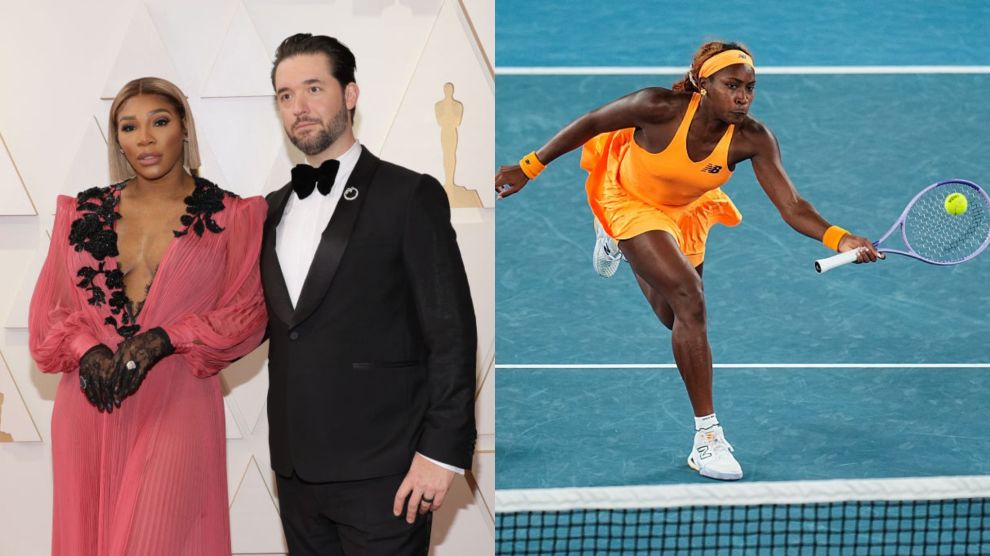
Serena Williams and her husband, Alexis Ohanian, moved swiftly to support American tennis star Coco Gauff after a post-match racket smashing episode at the Australian Open sparked debate this week. The gesture of solidarity came as Gauff publicly questioned how the private moment became global video content.
Gauff, 21, was eliminated from the quarterfinals in straight sets by Elina Svitolina, a result that left her visibly frustrated. After the loss, she attempted to release that frustration away from the courtside cameras but was recorded smashing her racket in a secluded part of the arena. She later criticized broadcasters for airing the footage.
“I tried to go somewhere where I thought there wasn’t a camera,” Gauff told reporters. “I don’t necessarily like breaking rackets.”
Voices of Support
In response, Ohanian took to social media to defend Gauff’s emotional intensity. On X, he wrote, “NGL I love this energy and emotion from @CocoGauff. … Coco did nothing wrong here.” He added that sports thrive on raw human effort and that athletes should be allowed to show that passion.
Williams publicly endorsed her husband’s message, amplifying the tone of understanding. “Well said,” she posted. “Passion. Caring. Matters. Nothing wrong with hating to lose.” Williams added a lighter comment directed at Gauff: “Now Coco when you want I can show you how to demolish in one swipe … Serena style.”
The encouragement from Williams, a 23-time Grand Slam champion and role model for younger players, touched many in the tennis community. Fans and commentators pointed out the significance of such support from one legend to another rising star.
Privacy and Pressure
The racket incident has fueled a broader dialogue about privacy for professional players. Gauff said her intent was to protect her emotions from becoming public spectacle. “Certain moments … I feel like they don’t need to broadcast,” she told reporters, referencing similar past incidents.
Other top players have echoed her concern. World No. 2 Iga Swiatek said the lack of private spaces for athletes can make them feel “like animals in a zoo,” highlighting growing discomfort with constant filming.
For Gauff, the discussion extends beyond one moment. She has emphasized that sincere emotional investment should be respected, even when it spills over. With Williams and Ohanian’s backing, the young champion’s call for empathy and reflection in sports media may gain traction. The incident underlines the pressures elite athletes face in a sport where emotional expression and public perception increasingly intersect.