
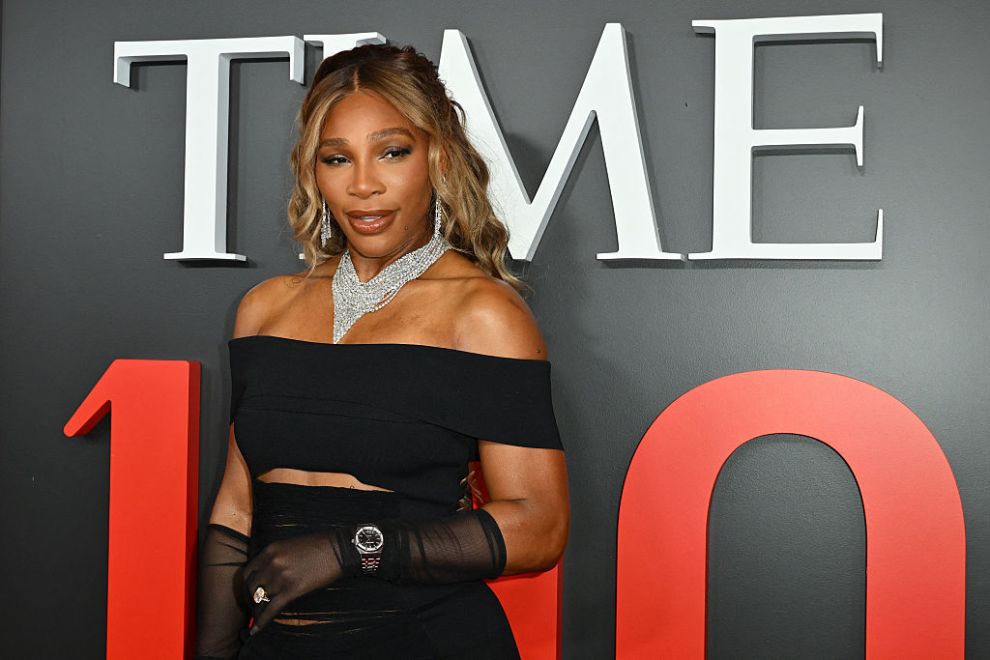
In a new interview with Porter magazine, tennis legend Serena Williams has spoken openly about the body-image struggles she faced early in her career. Her reflections recall a time when her muscular, curvier build made her feel out of place among slimmer athletes — and how that perception affected her mental health long before she became a sporting icon.
Early Pressure and Self-Doubt
Williams, now in her mid-40s, said she felt pressure from the very beginning. “It was hard because when I was playing in the beginning – the first 15 years – my body was different,” she told the magazine. “I had big boobs; I had a big butt. Every athlete was like super flat, super thin and beautiful, but in a different way. And I didn’t understand as an athlete how to deal with that.”
She said that constant comparison took a mental toll. “It does affect you mentally. Absolutely,” she added. “You think you’re large for your whole life and you look back and you’re like, I was fit. Yeah, I had big muscles. I didn’t look like these other girls but not everyone looks the same.”
Those feelings, she said, eventually led her to make a firm decision. “When I was 17, when I won the Open for the first time, I … said I’m never going to read anything about me,” she said. “I never really read an article after that.”
Over time, Williams said she came to appreciate her physique — both for what it gave her on the court and what it represented off the court. In previous interviews, she admitted she struggled to love her body. “When I was younger, it was hard seeing all these thin athletes when I had more muscular curves and was big-busted,” she said.
But as she grew, so did her confidence. “I’m really happy with my body type, and I’m really proud of it,” Williams said in one reflection. “It works out for me.”
She has also spoken about how societal standards shaped perceptions of beauty and athleticism. Growing up, she said she rarely saw women on television who looked like her. “There wasn’t positive body image. It was a different age,” she recalled.
Now, Williams embraces her legacy — not only as a champion on the court but also as a symbol of strength and self-acceptance. She said she hopes younger women and athletes can draw inspiration from her experience. In her words, the message is clear: “You have to love you.”
A Changing Landscape
Williams also acknowledged how much the world has shifted since her early days. She praised the growing acceptance of diverse body types among female athletes. She noted that many young women now feel comfortable embracing athletic builds.
Yet, she recognized that judgment and criticism still lurk — especially for women of color and those who don’t fit traditional norms. She reflected on how her physique and her skin color sometimes drew unfair scrutiny.