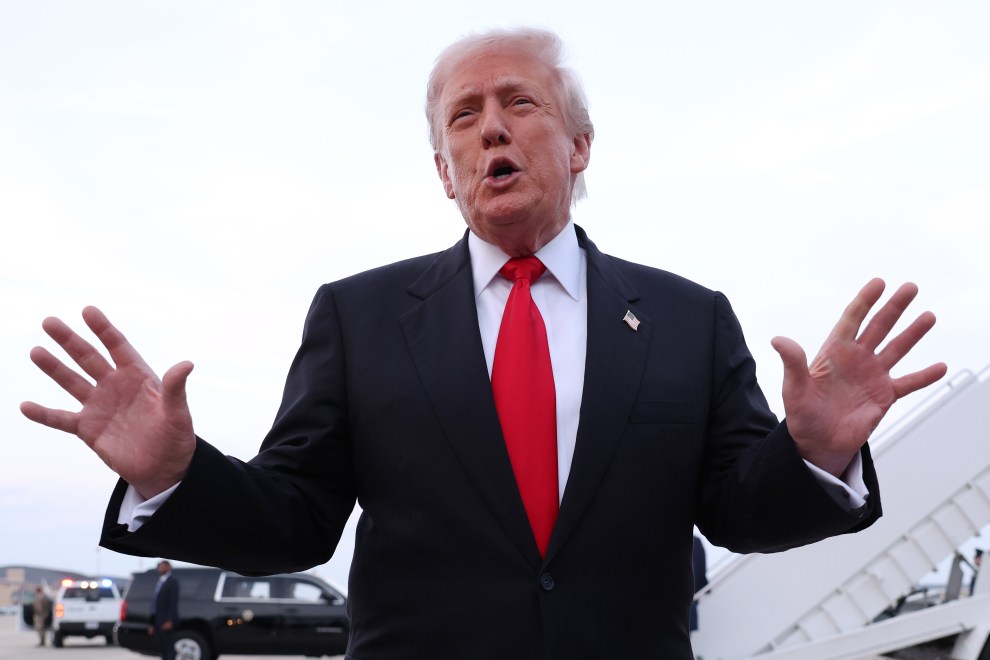
President Donald Trump on Sunday issued a series of stark warnings to Cuba, Colombia and Mexico that have ignited a firestorm of international concern. The remarks came as the United States grapples with fallout from a controversial military operation in Venezuela that captured President Nicolás Maduro in Caracas earlier this week.
Speaking aboard Air Force One, Trump all but predicted upheaval in Havana, charged the Colombian government with criminality, and bluntly warned Mexico to “get their act together” or face U.S. action. “Cuba is ready to fall,” Trump said, asserting that the island nation had lost its primary economic support after Maduro’s removal. “Cuba now has no income… Cuba literally is ready to fall,” he added.
Trump insisted that direct American intervention in Cuba might be unnecessary, asserting the communist government is on the brink of collapse. “They’re not getting any of it,” he said, referring to Venezuelan oil that once flowed to Havana. “But Cuba now has no income.”
Targeting Colombia and Mexico
Trump’s tone shifted sharply when discussing Colombia’s leadership. He accused President Gustavo Petro of overseeing a nation “very sick” with drug production and trafficking. “A sick man who likes making cocaine and selling it to the United States,” Trump said of Petro, warning that his tenure would soon end. “Sounds good to me,” Trump replied when asked if Washington should carry out an operation in Colombia.
Those comments drew an immediate backlash in Bogotá. Petro said Sunday his government remains committed to peace and legal order, and he rejected Trump’s accusations outright. The Colombian president called for regional unity in the face of external pressure, urging Latin American nations to defend sovereignty and stability.
On Mexico, Trump’s rhetoric focused on drug cartels and security concerns. “Mexico has to get their act together because they’re [drugs] pouring through Mexico,” Trump said, noting that he had offered to send U.S. troops to assist. “They’re capable of doing it, but unfortunately, the cartels are very strong in Mexico,” he added.
Mexican President Claudia Sheinbaum swiftly rejected the idea of U.S. military involvement, reiterating her nation’s sovereignty and its constitutional stance against foreign intervention. Sheinbaum welcomed cooperation on security issues but dismissed any prospect of a U.S. invasion as “not a serious proposal.”
The broader international community has reacted with alarm to Washington’s new posture. Leaders from several Latin American countries issued a joint statement condemning the U.S. military action in Venezuela as a threat to regional peace and a violation of international law. They warned it set a “dangerous precedent” that could destabilize the hemisphere.
Trump’s remarks underscore his administration’s aggressive new approach to American influence in the Western Hemisphere — a strategy he has dubbed the “Don-roe Doctrine,” a modern reinterpretation of the Monroe Doctrine. The doctrine emphasizes U.S. dominance in regional affairs and appears likely to shape policy debates in the months ahead.