
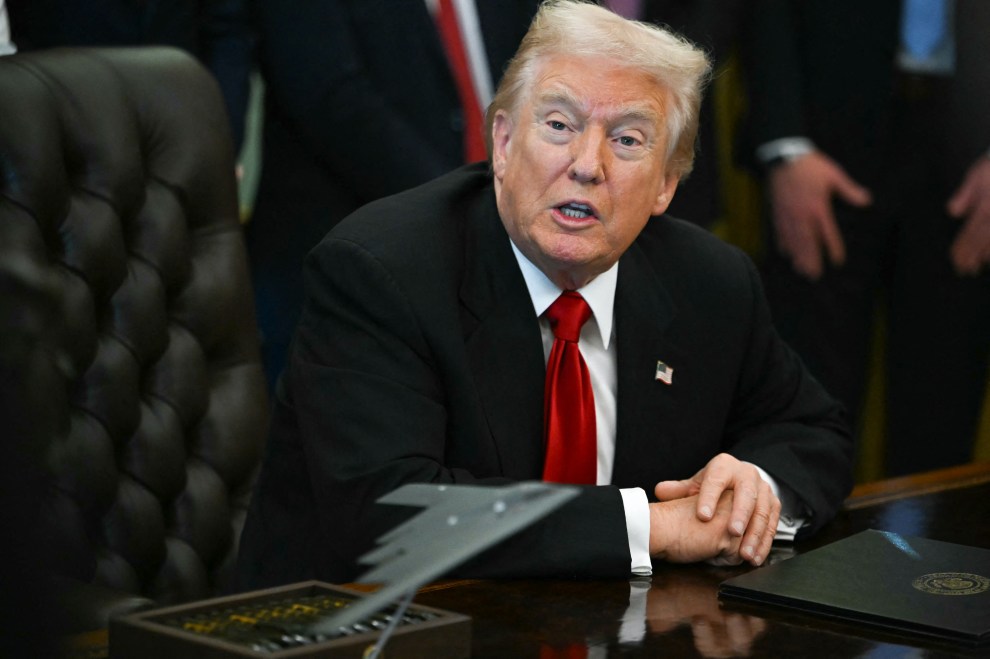
President Donald Trump stirred a fierce national debate this week by saying that landmark civil rights protections passed more than six decades ago have, in his view, led to “discrimination” against white Americans.
In a wide-ranging interview with The New York Times, Trump was asked whether civil rights protections that began with the Civil Rights Act of 1964 ultimately resulted in “discrimination against white men.” He responded with a stark assessment of the law’s impact.
“Well, I think that a lot of people were very badly treated,” Trump said. “White people were very badly treated, where they did extremely well and they were not invited to go into a university or a college.” Trump added, “So I would say in that way, I think it was unfair in certain cases.”
He acknowledged some benefits of civil rights laws but emphasized what he described as unintended consequences. “I think it was also, at the same time, it accomplished some very wonderful things,” Trump said. “But it also hurt a lot of people — people that deserve to go to a college or deserve to get a job were unable to get a job. So it was, it was a reverse discrimination.”
Reaction from Civil Rights Leaders
Derrick Johnson, president of the NAACP, strongly rejected Trump’s characterization. “There is no evidence that white men were discriminated against as a result of the civil rights movement, the Civil Rights Act, and efforts to rectify the long history of this country denying access to people based on race in every measurable category,” Johnson said in a statement to The Times.
Civil rights advocates argued Trump’s comments misrepresent the legal and historical record, pointing out that the Civil Rights Act was aimed at ending centuries of legal discrimination against Black Americans and other minorities.
The debate over Trump’s remarks quickly extended beyond civil rights history into broader policy. Last month, the Equal Employment Opportunity Commission (EEOC) issued a video message encouraging white men who believe they have faced workplace discrimination to come forward. “Are you a white male who has experienced discrimination at work based on your race or sex?” said EEOC chair Andrea Lucas in the video. “You may have a claim to recover money under federal civil rights laws.”
Trump’s comments reflect a broader effort by his administration to dismantle diversity, equity, and inclusion programs across federal agencies and to shift enforcement priorities of civil rights laws. Since taking office, the president has signed executive orders aimed at replacing what his aides call “DEI” initiatives with “merit-based” systems.
Supporters of the president welcomed his remarks, saying they highlight concerns among some voters who believe affirmative action and other corrective policies have gone too far. Critics countered that such positions risk undoing hard-fought gains and could deepen racial divisions.