
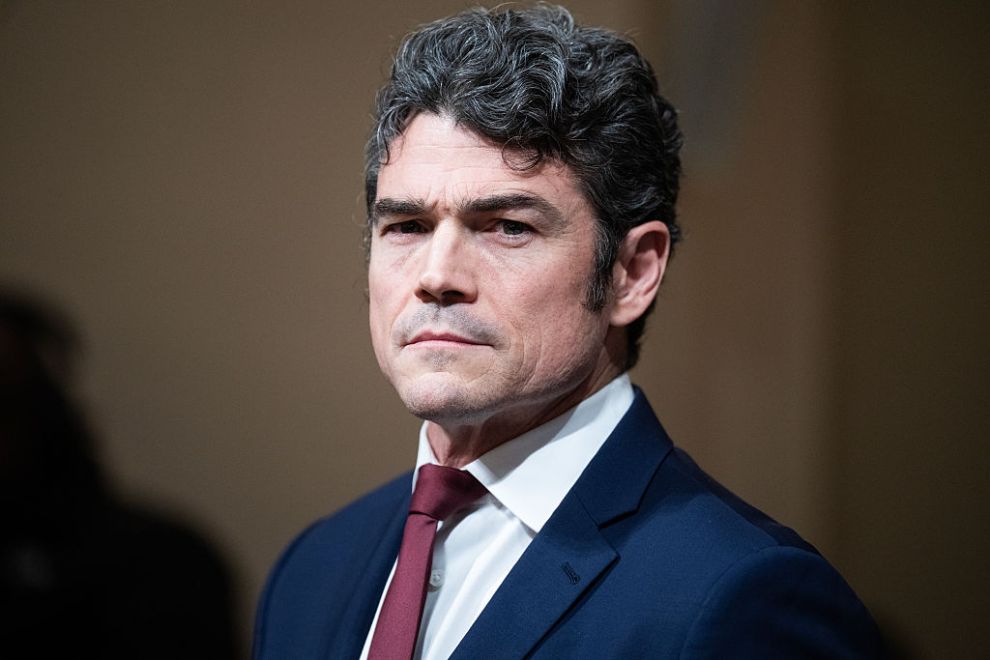
The director of the National Counterterrorism Center resigned Tuesday, breaking publicly with the White House over the ongoing war in Iran and raising fresh questions about the conflict’s justification.
Joe Kent, who led the nation’s primary counterterrorism analysis agency, said he could no longer support the administration’s actions. His departure marks the first high-level resignation tied directly to the war.
In a statement posted online, Kent wrote, “I cannot in good conscience support the ongoing war in Iran.”
He added, “Iran posed no imminent threat to our nation, and it is clear that we started this war due to pressure from Israel and its powerful American lobby.”
The White House quickly rejected those claims. Officials defended the military campaign and disputed Kent’s assessment of the threat posed by Iran.
President Donald Trump dismissed the criticism, describing Kent as “a nice guy” but “weak on security,” according to administration statements.
A Rare Public Break
Kent’s resignation is notable not only for its timing but also for its tone. Senior officials rarely oppose an ongoing military operation so directly while in office.
The conflict with Iran has entered its third week, with U.S. forces engaged alongside Israeli military operations.
Kent had been confirmed to the role less than a year ago and oversaw an agency responsible for identifying and analyzing global terrorism threats.
His exit signals unease within parts of the administration and its political base. Some allies who typically support a more restrained foreign policy have voiced concern about deeper U.S. involvement abroad.
The National Counterterrorism Center, created after the Sept. 11 attacks, plays a central role in advising policymakers on threats to U.S. security.
Debate Over Justification
At the center of the dispute is whether Iran posed an immediate danger warranting military action.
Administration officials have argued the strikes were necessary to counter ongoing threats and prevent future attacks. They maintain the operation is defensive in nature.
Kent sharply disagreed, saying the intelligence did not support claims of an imminent threat. His remarks echoed broader concerns about how intelligence is interpreted during wartime.
The disagreement comes as tensions in the region continue to escalate, with fears of retaliation and expanded conflict. Security experts have warned that Iran could respond through indirect or asymmetric means, including potential terrorist activity.
Despite the controversy, the administration has shown no signs of altering its strategy.
Kent’s resignation leaves a leadership gap at a critical moment for U.S. counterterrorism efforts. It also underscores the growing political and strategic divisions surrounding the war.