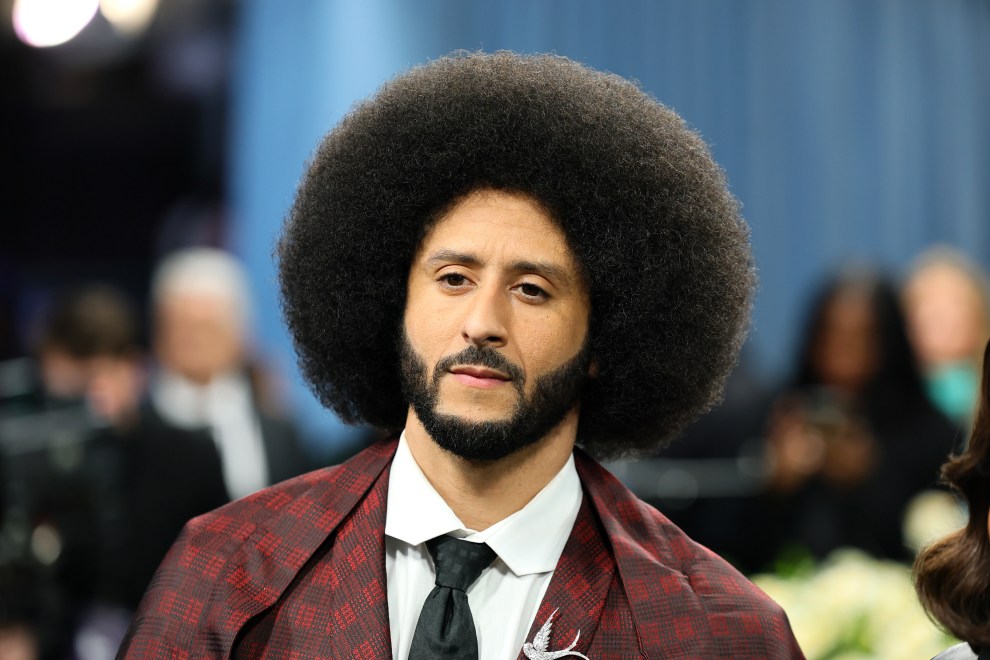
Colin Kaepernick is speaking out after Macklemore was removed from Ed Sheeran’s tour following his pro-Palestinian remarks.
The former NFL quarterback addressed the controversy during an appearance on the MeidasTouch podcast. Kaepernick specifically called out New England Patriots owner Robert Kraft and other NFL stadium owners involved in the dispute.
“The [NFL owners] are openly colluding,” Kaepernick said.
His comments came after Macklemore was dropped from the remaining U.S. dates of Sheeran’s Loop Tour. The rapper said several venues refused to host concerts if he remained on the lineup.
Macklemore traced the dispute to his recent performance at MetLife Stadium in New Jersey. During the show, Macklemore spoke about Palestinians in Gaza and the West Bank. He also declared, “Free Palestine.”
The rapper has publicly supported Palestinians for years. His 2024 protest song “Hind’s Hall” was inspired by pro-Palestinian campus demonstrations.
Kaepernick Sees Parallels To His NFL Exit
For Kaepernick, the controversy appears familiar. He began kneeling during the national anthem in 2016 to protest police brutality and racial injustice.
Kaepernick became a free agent after the 2016 season and was never signed by another NFL team. He later filed a grievance accusing NFL owners of colluding to keep him out of the league.
The NFL denied wrongdoing. Kaepernick and former teammate Eric Reid reached a confidential settlement with the league in 2019. During his latest interview, Kaepernick referenced that history while discussing Macklemore.
He argued that powerful owners will protect their financial interests when someone takes a position they oppose. Kaepernick also recalled skepticism surrounding his own allegations against NFL owners.
His remarks suggest he sees Macklemore’s situation as another example of owners using their influence collectively. Kraft has acknowledged that Gillette Stadium would not allow Macklemore to perform.
However, Kraft has disputed the idea that the decision was simply punishment for supporting Palestinians.
Kraft said the venue has a responsibility to maintain a welcoming environment and prevent what it considers hate speech. He cited Macklemore’s recent comments and what he described as a broader history of offensive imagery and rhetoric.
“This decision is not about diminishing the suffering of innocent Palestinians or denying anyone the right to advocate on their behalf,” Kraft said.
Kraft added that Palestinian suffering is real and said advocating for Palestinians should not come at the Jewish community’s expense. He also offered to meet with Macklemore to discuss their differences.
Macklemore’s Removal Sparks Wider Fallout
Macklemore said Sheeran personally told him Kraft had rallied other stadium owners against his participation. According to Macklemore, those venues threatened to reject Sheeran’s shows if the rapper remained an opening act.
Tour promoter Messina Touring Group confirmed venues had objected to Macklemore remaining on the lineup. The promoter said those objections threatened the continuation of the tour.
Sheeran later addressed the controversy himself. He said removing Macklemore was ultimately a decision made by venues and the tour’s promoter. Sheeran said he spent days speaking with venues in hopes of finding another solution.
“The venue’s and promoter’s decision was final,” Sheeran said.
Sheeran also said he respected Macklemore’s willingness to publicly stand behind his beliefs. The fallout did not stop with Macklemore. Finneas, Aaron Rowe, Lukas Graham and Irish band Beoga subsequently withdrew from scheduled appearances connected to Sheeran’s tour.
Their departures turned Macklemore’s removal into a broader debate about artists, political expression and control over major concert venues. Macklemore has since announced plans to donate $1 million from his Loop Tour earnings to organizations supporting Palestinians.
He publicly challenged Kraft to match the contribution. Kraft later announced a $2 million commitment after speaking with Sheeran about humanitarian aid in the region.
The controversy also places Kaepernick back inside a familiar conversation. A decade after his anthem protest began, he is again questioning how professional sports owners use their influence beyond the field.