
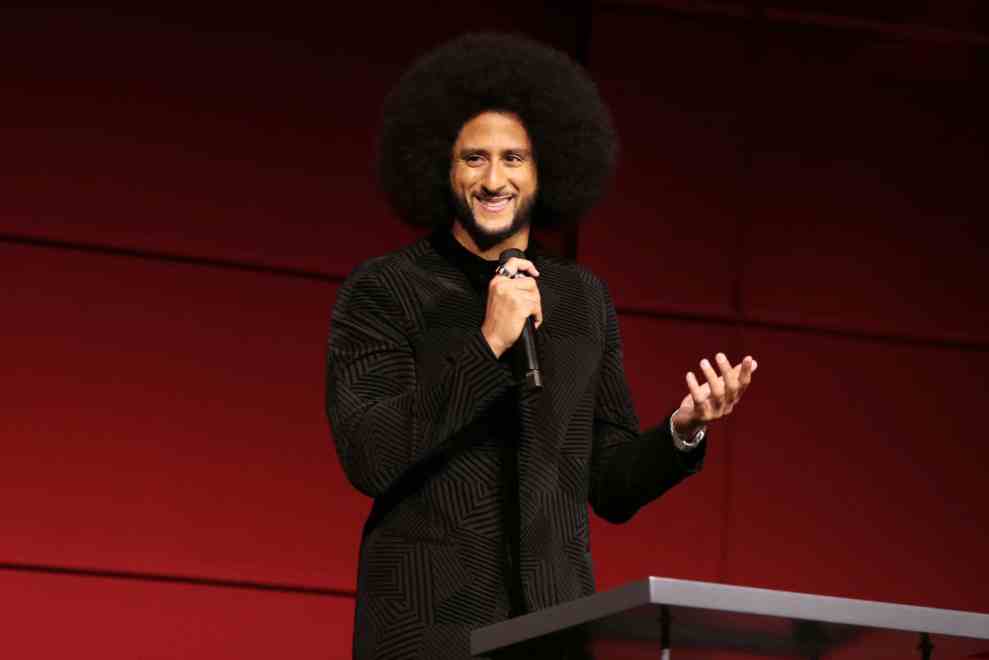
Former NFL quarterback Colin Kaepernick is opening up about the racial tensions he experienced growing up with his white adoptive parents.
During a recent appearance on Kerry Washington’s podcast, The Street You Grew Up On, Kaepernick recalled being criticized for embracing his Black identity. One particular disagreement involved his decision to grow out his hair and wear braids.
The former San Francisco 49ers quarterback explained that Black athletes influenced his understanding of identity and self-expression during his teenage years. Among those who inspired him were Allen Iverson, Randy Moss and Ken Griffey Jr.
“Hair was another one,” Kaepernick said, recalling his decision to experiment with different hairstyles.
“That led to me growing my hair out trying to get braids,” he explained.
However, his decision wasn’t welcomed by everyone in his household. Kaepernick said his hairstyle became a major source of disagreement with his parents, Rick and Teresa Kaepernick.
“Ultimately led to a point where I had my hair braided and was like, ‘Oh, well, you look like a little thug,’” he recalled.
The comments left Kaepernick questioning how his family viewed his Black identity.
Kaepernick Reflects on Growing Up in a White Household
Kaepernick was adopted as an infant and raised in a predominantly white community in California. Although he has spoken about the love he received from his parents, he has also acknowledged the challenges of their racial differences.
The former athlete previously addressed similar experiences while promoting his 2023 graphic novel, Change the Game. During an interview with CBS News, Kaepernick explained that his parents’ intentions did not erase the impact of their words.
“I know my parents loved me, but there were still very problematic things that I went through,” he said.
His experiences also shaped how he approached his appearance as an adult.
In a 2023 NPR interview, Kaepernick explained that the negative reactions to his cornrows had lasting consequences. He said it took approximately 14 years before he felt comfortable growing his hair out again.
For Kaepernick, braids represented more than a hairstyle. They were an opportunity to connect with a culture he admired while navigating an environment shaped by different expectations.
From Personal Experiences to Public Activism
Kaepernick’s reflections come as he continues discussing the experiences that shaped his activism and career. His recently released memoir, The Perilous Fight, examines his upbringing, racial identity and decision to challenge injustice.
The former quarterback became a prominent figure in the fight against racial inequality during the 2016 NFL season.
He began kneeling during the national anthem to protest police brutality and systemic racism against Black Americans.His demonstration sparked nationwide conversations about racial justice, patriotism and the role of professional athletes in political activism.
Kaepernick has not played in the NFL since the 2016 season, despite repeatedly expressing his desire to return.
His childhood experiences have also been explored through the Netflix limited series Colin in Black & White, co-created with filmmaker Ava DuVernay.
The series examines the challenges Kaepernick faced as a young Black athlete growing up in a white household. His latest comments further highlight how racial stereotypes can affect Black children, even within their own families.